
Treks by
March to June: Ideal for sightseeing, spiritual visits, and mild weather conditions. September to November: Post-monsoon freshness, clear Himalayan views, and fewer crowds. Avoid: July–August (heavy monsoon rains) and late December to January (chilly and possible snowfall for those unprepared).
By Road: Gopeshwar is well connected via motorable roads to major Uttarakhand towns and cities. From Rishikesh (230 km) and Haridwar, frequent buses and shared taxis are available via Rudraprayag and Chamoli. Private vehicles and hired cabs are also commonly used. By Rail: Nearest Railway Station: Rishikesh (~220 km) From there, take a bus or shared cab toward Chamoli or direct to Gopeshwar. By Air: Nearest Airport: Jolly Grant Airport, Dehradun (~225 km) Taxis and buses are available to reach Gopeshwar via Rishikesh and Chamoli.
{}
1,550 meters
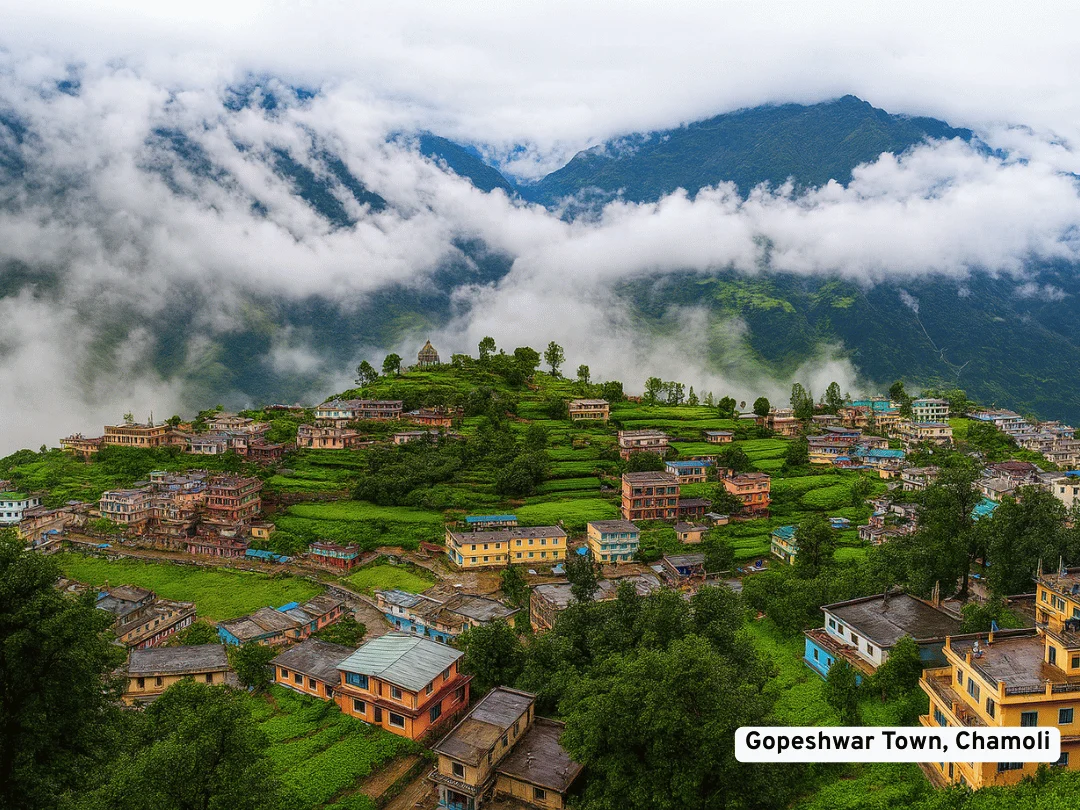
Gopeshwar is a scenic hill town located in the Chamoli district of Uttarakhand. Perched at an altitude of around 1,550 meters, it serves as the administrative headquarters of the district. Known for its serene environment, panoramic Himalayan views, and spiritual significance, Gopeshwar houses the ancient Gopinath Temple, dedicated to Lord Shiva. The town also serves as a gateway to popular destinations like Tungnath, Chopta, and Badrinath. With its blend of administrative importance and natural charm, Gopeshwar is a peaceful and culturally rich destination in the Garhwal Himalayas.
Gopeshwar is a tranquil hill town nestled in the Chamoli district of Uttarakhand, serving as the administrative headquarters of the region. Located at an altitude of approximately 1,550 meters above sea level, Gopeshwar is known for its pleasant climate, stunning Himalayan views, and deep-rooted spiritual heritage. Surrounded by dense deodar forests, terraced fields, and snow-capped peaks, the town offers a refreshing atmosphere for both pilgrims and nature lovers.
At the heart of Gopeshwar lies the Gopinath Temple, an ancient shrine dedicated to Lord Shiva. Believed to have been built in the 9th–11th century, this temple is a fine example of North Indian stone architecture. Legends say that Lord Shiva himself meditated here, and the temple is revered as one of the sacred sites in the region.
The temple draws devotees year-round and plays a central role during the Mahashivratri celebrations. A large trident (trishul) made of eight different metals stands in the temple compound and is said to be immovable by human strength.
Gopeshwar is blessed with natural charm. The town provides scenic views of the Nanda Devi, Chaukhamba, and Neelkanth peaks. The climate remains cool and pleasant throughout most of the year, making it an ideal retreat from the heat of the plains.
Nearby attractions include:
Chopta – Known as the "Mini Switzerland of India," ideal for trekking and bird watching
Tungnath Temple – The highest Shiva temple in the world, a short trek from Chopta
Anusuya and Atri Muni Ashram – Sacred spots with mythological significance
Badrinath Dham – A major Char Dham pilgrimage site, easily accessible via road
Gopeshwar has a rich spiritual and mythological history rooted in Hindu tradition. Its name is believed to be derived from "Gopinath", another name for Lord Shiva, to whom the town’s most famous temple—Gopinath Temple—is dedicated. The temple, built between the 9th and 11th centuries, stands as a testament to early North Indian stone architecture and the spiritual prominence of the region. According to legend, the mighty trishul (trident) standing in the temple courtyard was placed there by Lord Shiva himself. Over centuries, Gopeshwar has evolved from a remote spiritual site into the administrative and cultural center of the Chamoli district, maintaining a strong connection with both its mythological roots and local traditions.