
Treks by
March to June: Pleasant weather, perfect for sightseeing and attending cultural programs. September to November: Crisp air, fewer tourists, and ideal lighting for photography.
By Road: Shimla is well-connected by road with Delhi, Chandigarh, and other nearby cities. Regular Volvo and private buses, as well as taxis, are available. From ISBT Shimla, Mall Road is a short uphill walk or lift ride away. By Train: The nearest railhead is Shimla Railway Station, served by the historic Kalka–Shimla Toy Train, a UNESCO heritage line. From the station, take a taxi or walk to Mall Road. By Air: The nearest airport is Shimla Airport (Jubbarhatti), about 22 km away, with limited flights. Alternatively, fly to Chandigarh Airport (113 km) and drive to Shimla.
{}
2,205 meters
The Gaiety Theatre is a renowned name in the world of performing arts, with iconic venues in cities like London, Dublin, and Shimla. Known for its historic charm and cultural significance, each Gaiety Theatre has played a pivotal role in shaping local theatre traditions. The Gaiety Theatre in London, originally established in the 19th century, became famous for musical comedies and light-hearted performances that entertained the city’s elite. It introduced the world to the concept of the "Gaiety Girls," who became a symbol of grace and modern femininity during the Edwardian era. Though the theatre was eventually demolished, its influence on musical theatre lives on. In Shimla, India, the Gaiety Theatre was built in 1887 during the British colonial era. Designed in Gothic style, it remains a vibrant cultural hub, hosting plays, music events, and exhibitions. It continues to draw artists and visitors with its old-world charm and artistic legacy. These theatres have not only preserved artistic heritage but also continue to inspire new generations in the field of drama and performance.
The Gaiety Theatre in Shimla, Himachal Pradesh, is a historic cultural landmark that beautifully blends colonial architecture with a rich legacy of art and performance. Nestled on the bustling Mall Road, it is one of India’s oldest and most iconic theatres, drawing artists, historians, and tourists alike.
Built in 1887 during the British Raj, the Gaiety Theatre was designed by renowned British architect Henry Irwin, who also designed several other colonial-era structures in India. The theatre was part of a larger complex known as the Town Hall, which included a ballroom, an armoury, a police office, and an exhibition hall. The name "Gaiety" itself reflects the British fondness for leisure and entertainment.
In its early years, the theatre served as a central venue for British officers and elite civilians to stage plays, musical performances, and social gatherings. It quickly gained a reputation as the cultural heart of Shimla—then the summer capital of British India.
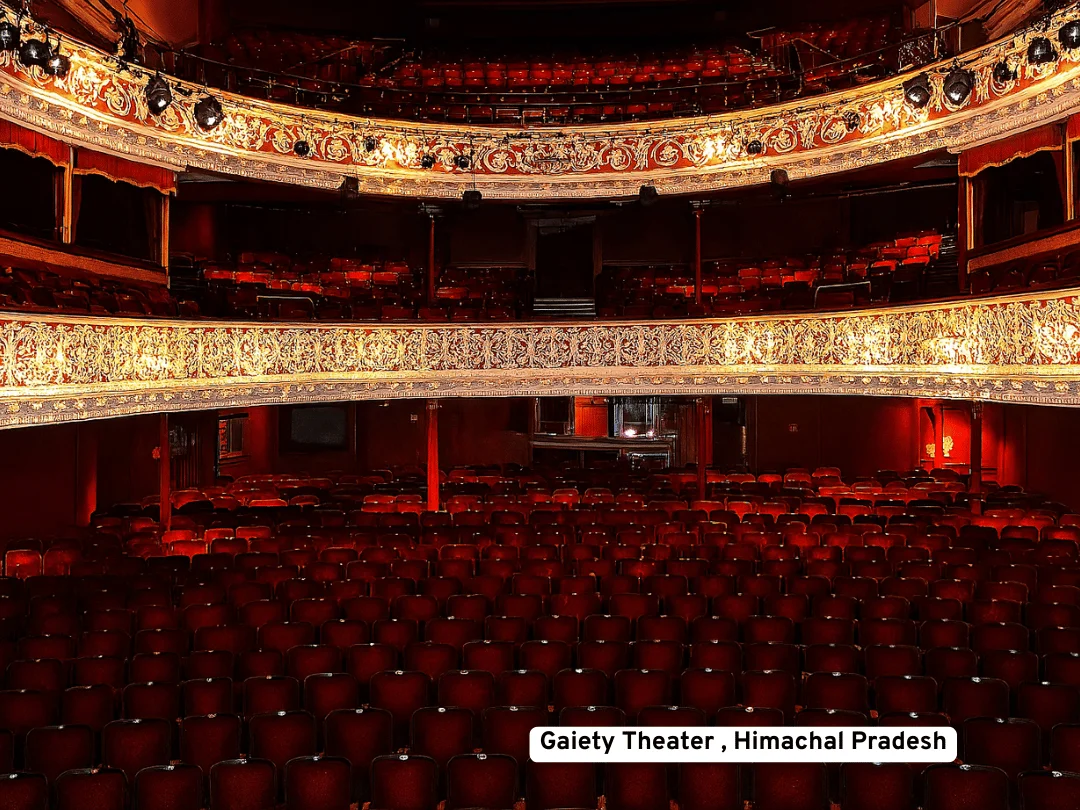
The Gaiety Theatre is built in the Gothic Revival style, characterized by arched doorways, stained-glass windows, pointed arches, and detailed stonework. Though the original five-story building was partially demolished in the early 20th century due to structural instability, the theatre section was preserved and restored.
Inside, the auditorium has a compact yet elegant design with a seating capacity of around 300 people. The stage, wooden balconies, and green rooms evoke a vintage charm, offering an authentic 19th-century theatre experience. The acoustics remain excellent, preserving the original architectural vision.
Over the decades, the Gaiety Theatre has hosted performances by famous personalities such as Rudyard Kipling, Prithviraj Kapoor, and Khuswant Singh. Today, it continues to serve as a platform for regional, national, and international artists to showcase theatre, dance, music, and visual arts.
Local drama groups regularly perform Hindi, English, and regional language plays here. The Himachal Pradesh government has played a significant role in preserving the site and promoting it as a modern-day cultural complex.
The theatre is now part of a larger cultural center that includes:
An Art Gallery
Exhibition Hall
Photography Museum
Amphitheatre
Multi-purpose Hall
These facilities are used for film screenings, cultural festivals, art exhibitions, and workshops. It also hosts Summer Festivals, heritage walks, and theatre competitions, making it a lively spot for community engagement.
Located at the heart of Mall Road, Shimla, the Gaiety Theatre is easily accessible to tourists. Its beautiful façade is a popular photo spot and the building often serves as a backdrop for films and documentaries. Guided tours of the complex are available for those interested in colonial heritage and theatre history.
The Gaiety Theatre is more than just a building—it is a living museum of Indian theatre history. Its grand architecture, rich heritage, and ongoing cultural contributions make it a timeless gem in Shimla's crown. Whether you are an art lover, a history enthusiast, or a traveler, the Gaiety Theatre offers a unique window into the artistic soul of colonial and modern India.
The Gaiety Theatre was constructed in 1887 during British colonial rule as part of the larger Town Hall complex on Mall Road, Shimla. Designed by British architect Henry Irwin in Gothic Revival style, the theatre quickly became a cultural hub for British officials, elite citizens, and Indian intellectuals. In its early years, it hosted plays, ballroom events, poetry readings, and even art exhibitions. Great literary figures such as Rudyard Kipling and famous Indian artists like Prithviraj Kapoor are associated with performances or visits here. Although parts of the original five-story structure were demolished due to safety concerns in the 20th century, the main theatre was preserved and restored. Today, it stands as one of the oldest functioning colonial theatres in Asia.