
Treks by
March to June: Pleasant summer weather ideal for sightseeing and outdoor activities. September to December: Clear skies and cooler temperatures, offering breathtaking views of snow-clad mountains.
By Road: Didihat is well-connected by road. You can drive or hire a taxi from major cities: Delhi to Didihat: Approximately 552 km (about 8 hours by car) Meerut to Didihat: Approximately 512 km By Rail: The nearest railway stations are: Tanakpur: Approximately 210 km from Didihat Kathgodam: Approximately 228 km from Didihat From these stations, taxis and buses are available to reach Didihat. By Air: The nearest airport is Pantnagar Airport, located about 263 km from Didihat.
{}
1,850 meters
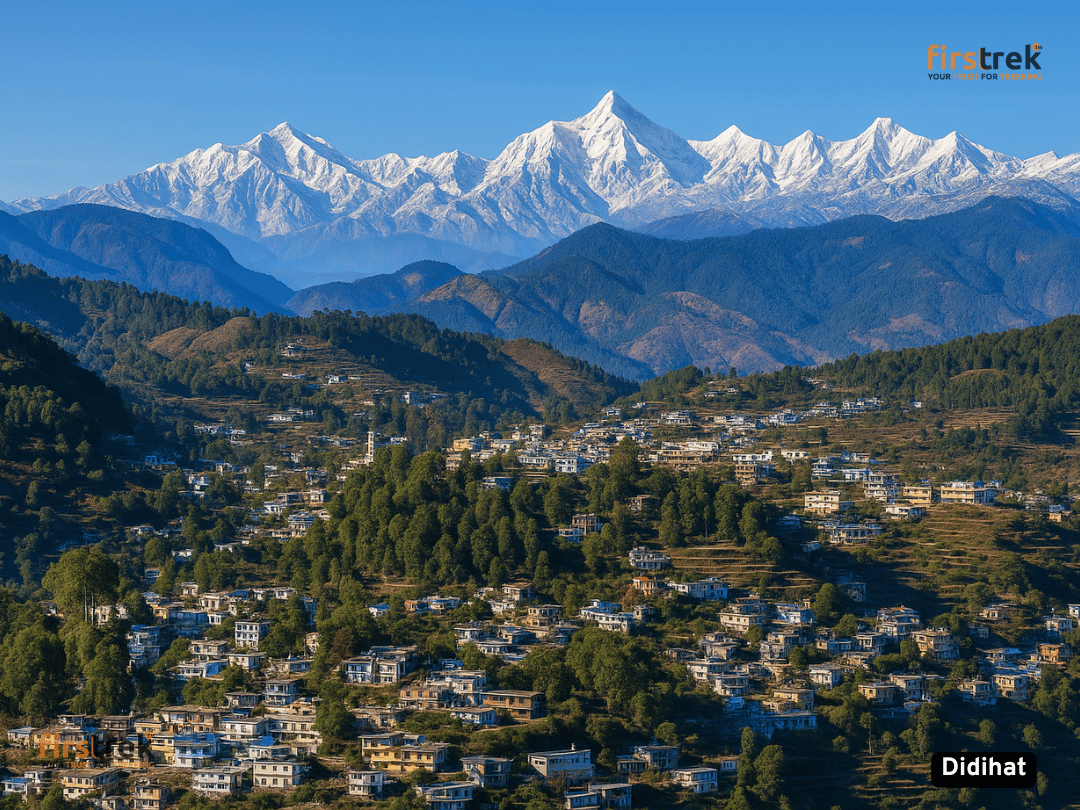
Didihat is a picturesque hill town nestled in the Pithoragarh district of Uttarakhand, India. Situated at an elevation of approximately 1,725 meters (5,659 feet) above sea level, it offers panoramic views of the snow-capped Himalayan peaks, including the majestic Panchachuli and Trishul ranges . The town lies on the pilgrimage route to Kailash Mansarovar, making it a significant stop for spiritual travelers .
Didihat is a serene and lesser-explored hill town in the Pithoragarh district of Uttarakhand, perched at an altitude of around 1,725 meters above sea level. Surrounded by dense pine forests and offering panoramic views of the majestic Himalayan peaks such as Panchachuli, Nanda Devi, and Trishul, Didihat is a paradise for nature lovers, photographers, and peace seekers.
The town lies on the historic pilgrimage route to Kailash Mansarovar and is steeped in cultural and spiritual significance. Once ruled by the Katyuri and Chand dynasties, Didihat still preserves the remnants of ancient forts and temples, reflecting its glorious past.
Didihat has a rich historical legacy that dates back to the rule of the Katyuri dynasty, one of the most influential dynasties in the Kumaon region. It later came under the control of the Raika kings of Sirakot, who built many temples and fortifications in the region. The area was subsequently ruled by the Chand rulers of Kumaon, who helped spread the influence of Hindu culture and temple architecture. Ruins and ancient shrines in and around Didihat, especially the Sirakot Malaynath Temple, bear testimony to its historical importance.