
Treks by
Spring (March–April): Fresh and green, ideal for meditation and treks Summer (May–June): Pleasant and sunny (15°C to 25°C) Autumn (Sept–Nov): Crisp air and clear views of the Dhauladhar range Avoid monsoon (July–August) due to slippery trails and landslides Winters (Dec–Feb): Cold but serene; occasional snowfall adds charm
By Air: Nearest airport is Kangra Airport (DHM), ~20 km from Dharamkot. Taxis are easily available. By Train: Nearest major railway station is Pathankot Junction (approx. 90 km). From there, take a taxi or local bus to McLeod Ganj. By Road: Well-connected by road from Delhi, Chandigarh, and Amritsar. Direct buses are available till McLeod Ganj, from where Dharamkot is a 30-minute uphill walk or 10-minute drive.
{}
2,100 meters
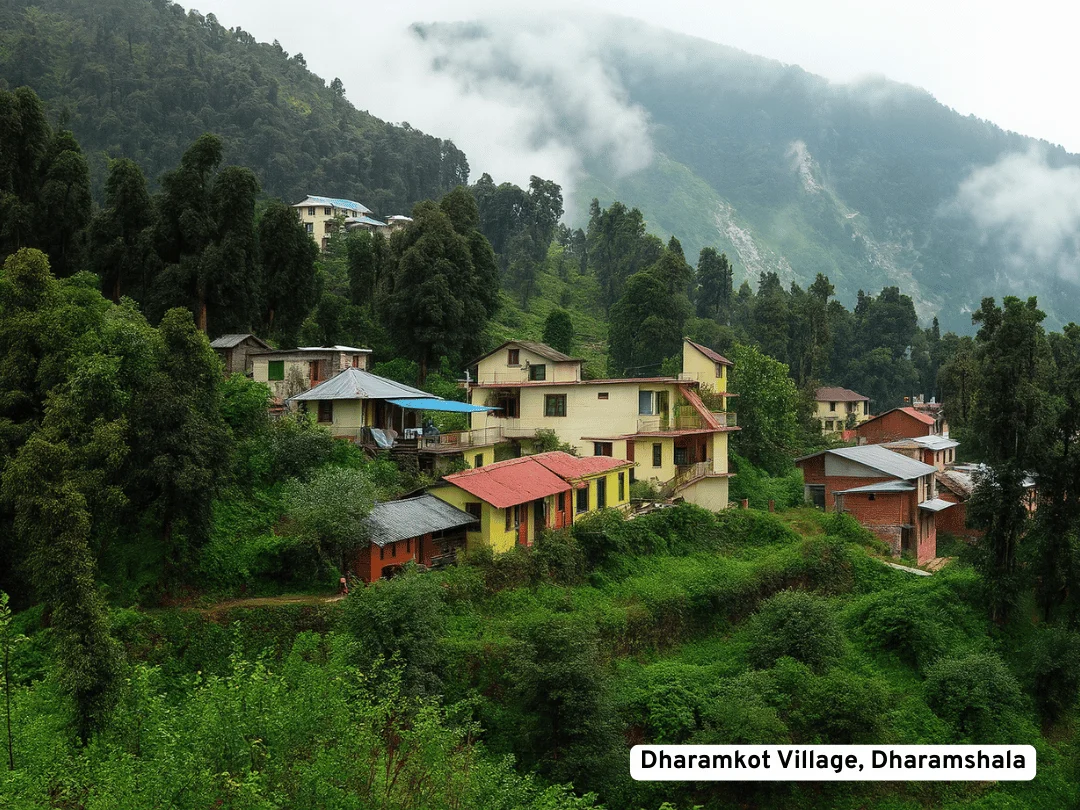
Dharamkot is a charming hillside hamlet just 4 km above McLeod Ganj, perched at about 2,100 meters in the scenic Dhauladhar foothills. Known for its laid-back “hippie” vibe, the village coexists tranquilly with Buddhist culture and local Himachali life. It's popular among hikers, yoga enthusiasts, and spiritual seekers who are drawn to its forest trails, meditation spaces, and stunning views of snow-capped peaks. Dotted with cozy cafés, small guesthouses, and wellness centers, Dharamkot offers a peaceful break from tourist zones—perfect for sunrise hikes toward Triund or silent reflection surrounded by cedar forests. The village's warm community atmosphere and soul-soothing landscapes make it an ideal choice for those seeking Himalayan serenity with a side of creative energy.
Nestled in the upper reaches of McLeod Ganj, Dharamkot is a peaceful village perched at an altitude of approximately 2,100 meters in the Dhauladhar mountain range. Often referred to as the “Yoga Village” of Himachal, Dharamkot has earned a reputation as a quiet, spiritually rich alternative to the bustling streets of McLeod Ganj.
The village is surrounded by lush deodar and rhododendron forests and offers panoramic views of the Kangra Valley and distant snow-covered peaks. Its narrow lanes are lined with organic cafés, guesthouses, yoga and meditation centers, and art schools that reflect its creative and spiritual energy.
Dharamkot is a melting pot of cultures. Locals coexist with travelers from across the world, many of whom stay for weeks or months to study Tibetan Buddhism, practice yoga, or simply reconnect with nature. It’s also the starting point for popular treks like Triund, Indrahar Pass, and Naddi.
Despite its growing popularity, Dharamkot retains its rustic charm and minimalism. The lack of heavy commercial development helps preserve its raw Himalayan feel. Whether you're meditating at the Tushita Meditation Centre, sipping tea with a view, or just listening to the mountain winds, Dharamkot invites you to slow down and breathe deeper.
Dharamkot has historically been a quiet village occupied by local Gaddi tribes, primarily shepherds and farmers who lived in harmony with the surrounding Dhauladhar forests. Its transformation began in the late 20th century, when global backpackers and spiritual seekers discovered its tranquility near McLeod Ganj. Over time, Dharamkot evolved into a center for yoga, meditation, and alternative living—without losing its rustic Himachali roots.