
Treks by
March to June: Pleasant spring weather; great for outdoor meditation, sightseeing, and attending teachings September to November: Post-monsoon freshness with clear skies and spiritual ambiance Winter (Dec–Feb): Quiet and peaceful; occasional snow, especially in January
By Air: Nearest airport is Gaggal (Kangra) Airport, approx. 20 km from McLeod Ganj. Taxis and shared cabs are available outside the terminal. By Train: The closest broad-gauge station is Pathankot (~90 km). From there, taxis and buses take 3–4 hours to reach McLeod Ganj. By Road: Regular buses from Delhi, Chandigarh, and Manali connect to Dharamshala. From Dharamshala, it’s a 15–20 minute uphill ride to McLeod Ganj, and the temple is walkable from the main square.
{}
1,770 meters
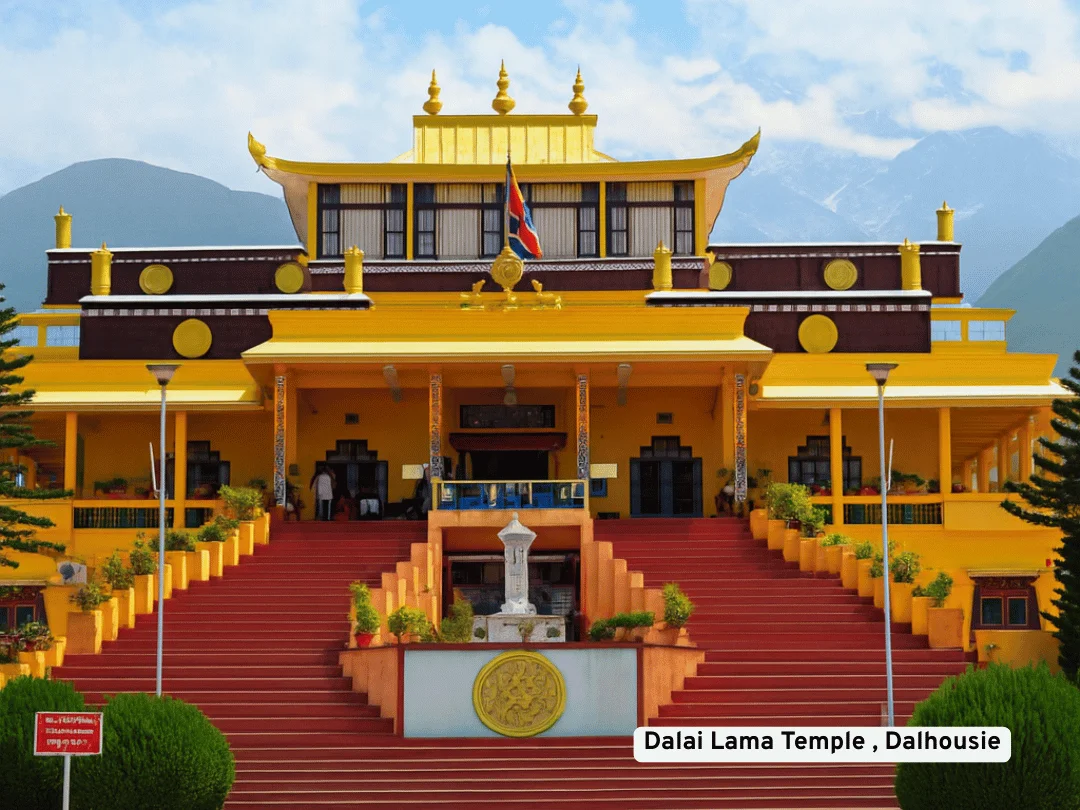
The Dalai Lama Temple Complex, also known as Tsuglagkhang, is a spiritual and cultural center located in McLeod Ganj, Dharamshala, Himachal Pradesh. It is the official residence of His Holiness the 14th Dalai Lama and the heart of the Tibetan Buddhist community in exile. Open to all visitors, the temple complex includes a serene prayer hall, statues of Buddha, Avalokiteshvara, and Guru Rinpoche, and colorful prayer wheels. Monks can be seen chanting and meditating, creating a peaceful and sacred atmosphere. The temple also houses the Namgyal Monastery and a small museum that shares the history of Tibet. Set against the backdrop of the Dhauladhar mountains, it is not just a religious site but also a symbol of peace, compassion, and resilience.
The Dalai Lama Temple Complex, locally known as Tsuglagkhang, is the spiritual epicenter of Tibetan Buddhism in exile and one of the most important landmarks in McLeod Ganj, a serene hill town above Dharamshala in Himachal Pradesh. It is the official residence of His Holiness the 14th Dalai Lama, who settled here in 1960 after fleeing Tibet during Chinese occupation.
The temple is not only a pilgrimage site but also a symbol of peace, compassion, and the global Tibetan community’s resilience.
Main Temple Hall (Tsuglagkhang):
The prayer hall houses large statues of Buddha Shakyamuni, Avalokiteshvara (Chenrezig), and Padmasambhava (Guru Rinpoche). The environment is peaceful, filled with the rhythmic sound of mantras and prayer wheels.
Namgyal Monastery:
The personal monastery of the Dalai Lama, it is home to hundreds of monks who study and practice Buddhist philosophy, rituals, and debate.
Tibetan Museum:
A small but powerful exhibit that shares the history of Tibet, the Chinese invasion, and the journey of the Tibetan exile community. It showcases rare photographs, documents, and videos.
Meditation & Walking Paths:
A shaded, circular path lined with prayer wheels and flags allows visitors and monks to perform kora (meditative circumambulation), offering stunning views of the Dhauladhar mountains.
The complex is open to all visitors, regardless of religion or background. Devotees, monks, tourists, and spiritual seekers often gather here in silence or prayer, creating an environment of unity and deep reverence.
During public teachings, thousands attend discourses by the Dalai Lama, with translations provided in multiple languages. These sessions are deeply inspiring, drawing people from around the world.
Location: Temple Road, McLeod Ganj, Dharamshala, Himachal Pradesh
Altitude: Approx. 1,770 meters
Nearest Airport: Gaggal Airport (~20 km)
Nearest Railway Station: Pathankot (~90 km)
Access: A short 10–15 minute walk from McLeod Ganj main square
The Dalai Lama Temple Complex, also known as Tsuglagkhang, was established in 1960, soon after His Holiness the 14th Dalai Lama arrived in India following his exile from Tibet. Located in McLeod Ganj, a small hill town in Himachal Pradesh, this site became the official residence of the Dalai Lama and the spiritual headquarters of the Tibetan Government-in-Exile. The complex was designed to resemble traditional Tibetan monastic architecture and has since evolved into a global spiritual destination. It has been a place of peace, dialogue, and resistance—housing sacred teachings, prayers, and expressions of Tibetan identity and resilience.