
Treks by
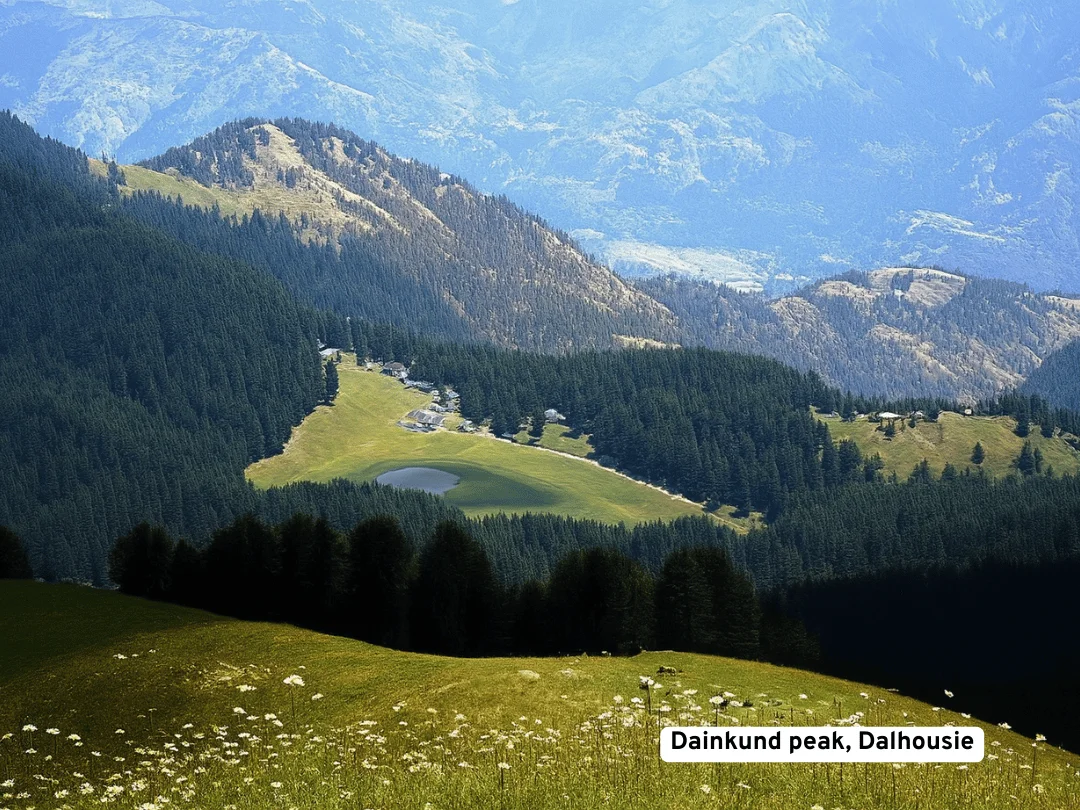
The ideal time to visit Dainkund Peak is between March to June and September to November: Spring–Summer (March to June): Clear skies, cool breeze, and green trails perfect for trekking Autumn (September to November): Post-monsoon clarity with golden hues and fewer crowds Winter (Dec–Feb): Offers snowy landscapes and adventure but trekking access may be limited
By Road: Dainkund is located 12 km from Dalhousie town. You can drive up to the Air Force Base near Lakkar Mandi, and from there, a 1.5 km trek leads to the summit. Local taxis are available in Dalhousie. By Rail: The nearest railway station is Pathankot (approx. 85 km). Buses and taxis are available from Pathankot to Dalhousie, followed by a road trip to the base of Dainkund. By Air: The closest airport is Kangra Airport (Gaggal), around 115 km from Dalhousie. From there, you can reach Dalhousie via taxi and continue to Dainkund.
{}
2,755 meters
Dainkund Peak is the highest point in Dalhousie, rising to about 2,755 meters above sea level. Known as the "Singing Hill", the peak gets its name from the eerie yet melodic sound the wind makes as it passes through the deodar and pine trees.Offering 360-degree panoramic views of the snow-capped Himalayas, lush valleys, and nearby rivers, Dainkund is a favorite for nature lovers and trekkers. A short trek of about 1.5 km leads to the top, where the Pholani Devi Temple stands peacefully against the dramatic backdrop. It’s a must-visit for stunning sunsets, tranquility, and breathtaking mountain vistas.
Dainkund Peak is the highest point in Dalhousie, located at an impressive altitude of 2,755 meters (9,038 feet). Surrounded by dense deodar forests and sweeping alpine meadows, the peak is popularly known as the "Singing Hill" due to the distinctive whistling sounds created by wind rushing through the trees.
Located about 12 km from Dalhousie town, Dainkund offers a tranquil escape with 360-degree panoramic views of the Pir Panjal Range, nearby villages, and valleys wrapped in mist and serenity.
A 1.5 km easy trek from the Army checkpost (near the Air Force base) takes you through lush green trails to the summit. Along the path, you’ll find wildflowers, birds, and open skies that feel close enough to touch. The well-marked trail is safe and beginner-friendly.
At the top, visitors are greeted with jaw-dropping views of:
Snow-capped peaks during winter and spring
Green valleys and meadows in summer
Floating clouds and dramatic skies in monsoon and autumn
One of the highlights at Dainkund Peak is the Pholani Mata Temple, dedicated to Goddess Kali. What makes it unique is the absence of an idol—instead, a trident (trishul) is worshipped. Locals consider the site highly sacred, and pilgrims often visit for blessings before descending.
The temple adds a spiritual layer to the adventure, making the experience more than just a trek—it’s a peaceful, soul-soothing journey.
Trekking and hiking
Bird watching and photography
Spiritual visit to Pholani Temple
Meditation and silent walks
Picnics with scenic views
Due to the high altitude and lack of commercial infrastructure, it remains unspoiled and perfect for eco-tourists and solo travelers seeking raw natural beauty.
Dainkund Peak, known as the "Singing Hill", has both natural and mythological significance. The name "Dainkund" is believed to be derived from the word “dain” (witch), as local legends speak of a spirit that once haunted the peak. Later, the spirit was subdued, and a temple dedicated to Pholani Devi was constructed at the summit, symbolizing the triumph of good over evil. The region was also historically important for the hill tribes and shepherds of Chamba, who considered the peak sacred due to its untouched beauty and spiritual presence. Today, it stands not only as a scenic marvel but also a silent keeper of these mountain legends.