
Treks by
March to June: Ideal for pleasant weather, blooming landscapes, and accessible roads September to October: Clear skies, golden forests, and fewer crowds November to February: Snowfall transforms Chitkul into a winter wonderland, but road access may be blocked Avoid July–August: Due to monsoon rains and landslides
By Air: Nearest Airport: Shimla Airport (~250 km) From Shimla, drive or take a bus toward Rampur, then to Sangla and Chitkul By Train: Nearest Railhead: Kalka (~270 km) From Kalka, continue by road via Shimla → Rampur → Sangla → Chitkul By Road: Regular HRTC and private buses go up to Sangla or Reckong Peo From Sangla, hire a local taxi or drive on a scenic mountain road to reach Chitkul
{}
3,450 meters
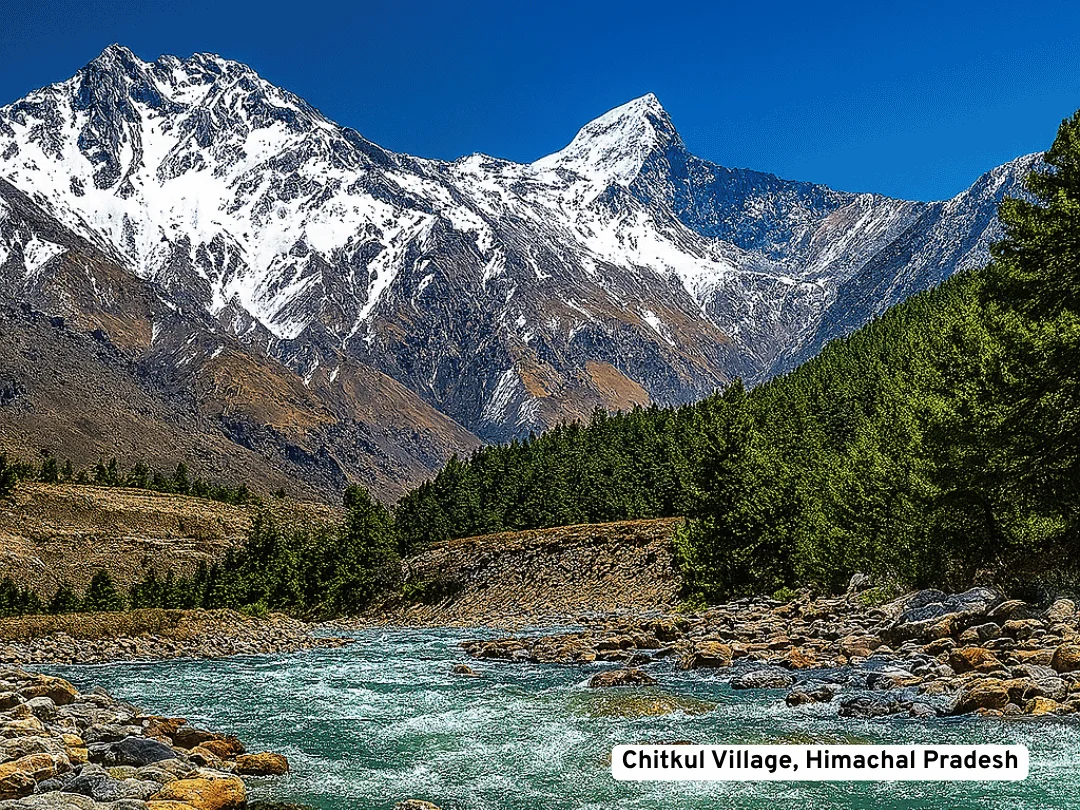
Chitkul is a serene Himalayan village located in the Kinnaur district of Himachal Pradesh, close to the Indo-Tibetan border. Often referred to as the last inhabited village of India, it sits on the banks of the Baspa River at an altitude of about 3,450 meters. Surrounded by snow-capped peaks and wooden houses with slate roofs, Chitkul offers breathtaking views and a peaceful escape into nature. With its clean air, slow pace, and stunning landscapes, it is a favorite among trekkers, photographers, and those seeking untouched mountain beauty.
Chitkul is a remote and stunningly beautiful village located in the Kinnaur district of Himachal Pradesh. Positioned at an altitude of around 3,450 meters, it is popularly known as the last inhabited village near the Indo-Tibetan border, beyond which only military checkpoints exist. Set against the backdrop of snow-covered peaks, alpine meadows, and the glacial Baspa River, Chitkul offers a perfect blend of natural charm, traditional culture, and untouched mountain serenity.
The journey to Chitkul from Sangla (28 km away) is a scenic adventure in itself, with winding mountain roads, dense forests, and panoramic views of the Baspa Valley. Once you reach the village, you're greeted by a landscape that seems straight out of a postcard—wooden houses with slanted roofs, open pastures, and dramatic Himalayan backdrops.
In spring and summer, the area is lush and green, dotted with wildflowers and apple orchards. In winter, the village gets covered in snow, giving it an ethereal, frozen-in-time appearance. The Baspa River flows peacefully alongside, adding to the village’s serene vibe.
Chitkul is home to the Kinnauri tribe, known for their warmth, simplicity, and strong cultural roots. The locals live in traditional wooden houses, and most people are engaged in farming, shepherding, and tourism. The influence of both Hindu and Buddhist traditions is evident in the village temples and daily life.
One of the most significant landmarks is the ancient Mathi Devi Temple, believed to be over 500 years old and deeply revered by the people of the region.
Riverside Walks: Enjoy quiet walks along the Baspa River with stunning views
Village Exploration: Wander through wooden homes, visit local temples, and experience Kinnauri hospitality
Photography: Ideal for landscape, cultural, and astro photography
Camping: Set up camp near the river or stay in cozy guesthouses
Trekking: Trails from Chitkul lead toward Nagasti ITBP post, Rani Kanda, and longer expeditions like Borasu Pass (into Uttarakhand)
April to June: Pleasant weather, blooming valleys, ideal for trekking and sightseeing
September to October: Crisp air, clear skies, and golden-hued forests
Winter (Nov to March): Heavy snowfall; village may be inaccessible
Avoid Monsoon (Jul–Aug): Roads may be risky due to landslides
Chitkul is a historically significant village in the Kinnaur district of Himachal Pradesh, often referred to as the last inhabited village on the Indo-Tibetan border. In ancient times, it lay on a trade route connecting India with Tibet. Merchants, pilgrims, and travelers once crossed this region, contributing to its cultural richness. The wooden temples and stone houses in the village reflect Kinnauri architectural traditions, influenced by a blend of Hindu and Tibetan Buddhist beliefs. One of the oldest structures in the village is the Mathi Devi Temple, believed to be over 500 years old. According to local legends, the presiding deity, Mathi Devi, travelled from a distant land to settle in Chitkul, making it spiritually important for the Kinnauri people.