
Treks by
March to June and September to November are ideal for pleasant weather and clear views of the Himalayas. December to February is great for snow lovers, but temperatures can drop below freezing.
By Road: Chaukori is well-connected by road to major towns like Almora (173 km), Pithoragarh (90 km), Berinag (10 km), and Bageshwar (50 km). Regular buses and shared taxis are available from Haldwani, Almora, and Bageshwar. By Rail: The nearest railway station is Kathgodam (about 198 km), connected to major cities like Delhi and Dehradun. From Kathgodam, taxis and buses can be hired to reach Chaukori. By Air: The nearest airport is Pantnagar Airport (about 193 km). Limited flights operate, so check availability in advance.
{}
2010 meters
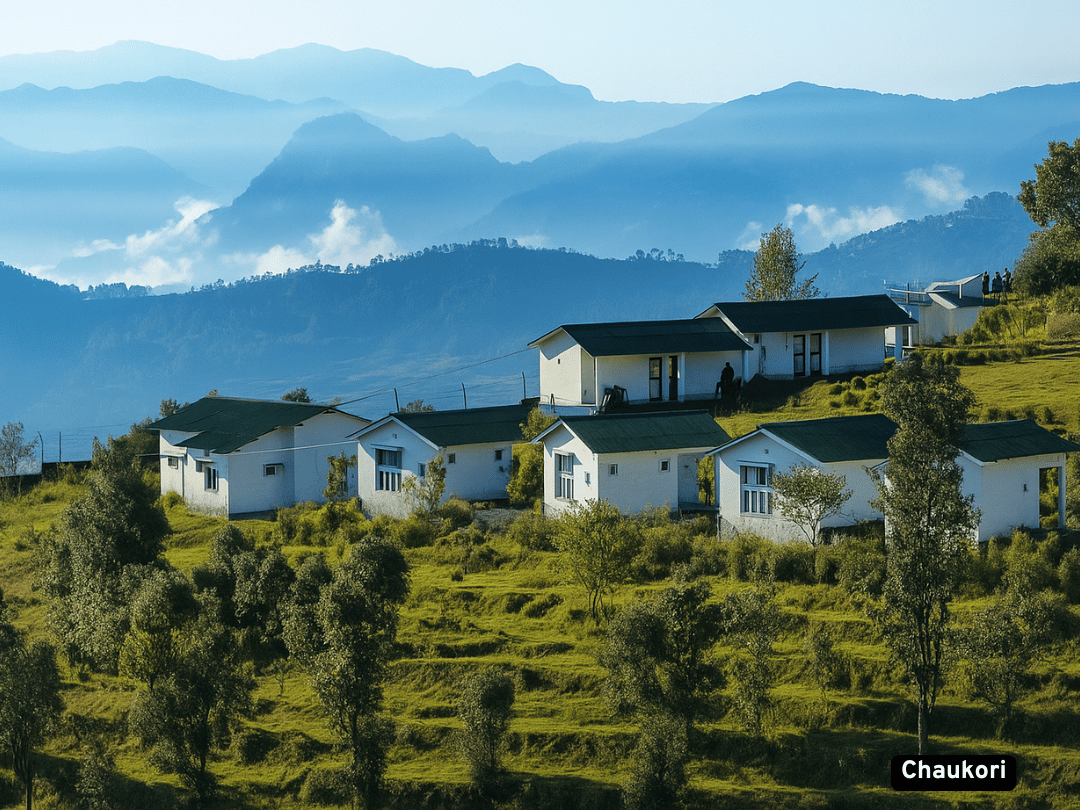
Chaukori is a serene hill station perched at about 2,010 m (6,600 ft) in Pithoragarh district, Uttarakhand, nestled in the Kumaon Himalayas Known as a tranquil getaway, it's embraced on all sides by towering peaks—such as Nanda Devi, Nanda Kot, and Panchachuli The morning sun painting these mountains golden is a spectacle not to be missed
Chaukori’s charm lies not only in its landscapes but also in its cultural depth. The region is home to ancient temples such as Arjuneshwar Shiva Temple, Kapileshwar Mahadev Cave, and Nag Devta Temple. Nearby spiritual sites like Patal Bhuvaneshwar and Berinag add to the religious significance of this serene destination.
Travelers can enjoy sunrise and sunset views over snow-clad mountains, explore tea estate walks, go bird watching, or simply relax amidst the silence of nature. The mornings here begin with golden light hitting the white peaks—an unforgettable experience for photographers and nature lovers alike.
Tea-Garden Legacy: Chaukori’s landscape was shaped during British colonial days when tea estates like Berinag and Dharamghar were established. By the 1970s, a lone tea factory and a KMVN rest house drew early tourists intrigued by scenic vistas and Himalayan air Kumaon Heritage: Situated in the Kumaon region, this area shares in the legacy of the Kurmanchal kingdom and later the Chand dynasty—peoples whose culture still thrives in local traditions and festivals