
Treks by
Late May to Early July: Ideal for snow and adventure seekers Mid-September to Early October: Clear skies, less snow, stable weather Avoid: July–August (monsoon, landslides) and November–April (heavy snowfall)
1. By Air: Nearest Airport: Jolly Grant Airport, Dehradun (~200 km from Sankri) From Dehradun, hire a taxi or take a bus to Sankri 2. By Rail: Nearest Railway Station: Dehradun Railway Station (~190 km) Continue the journey to Sankri by road 3. By Road: Sankri is connected via motorable roads from Dehradun, Mussoorie, and Purola Direct buses or shared jeeps are available from Dehradun to Sankri Trek starts from Sankri → Taluka → Osla → Har Ki Dun → Borasu Pass Exit Route: After crossing the pass, the trek ends at Chitkul (Himachal Pradesh), which is well-connected to Reckong Peo and Shimla
{}
5,450 meters
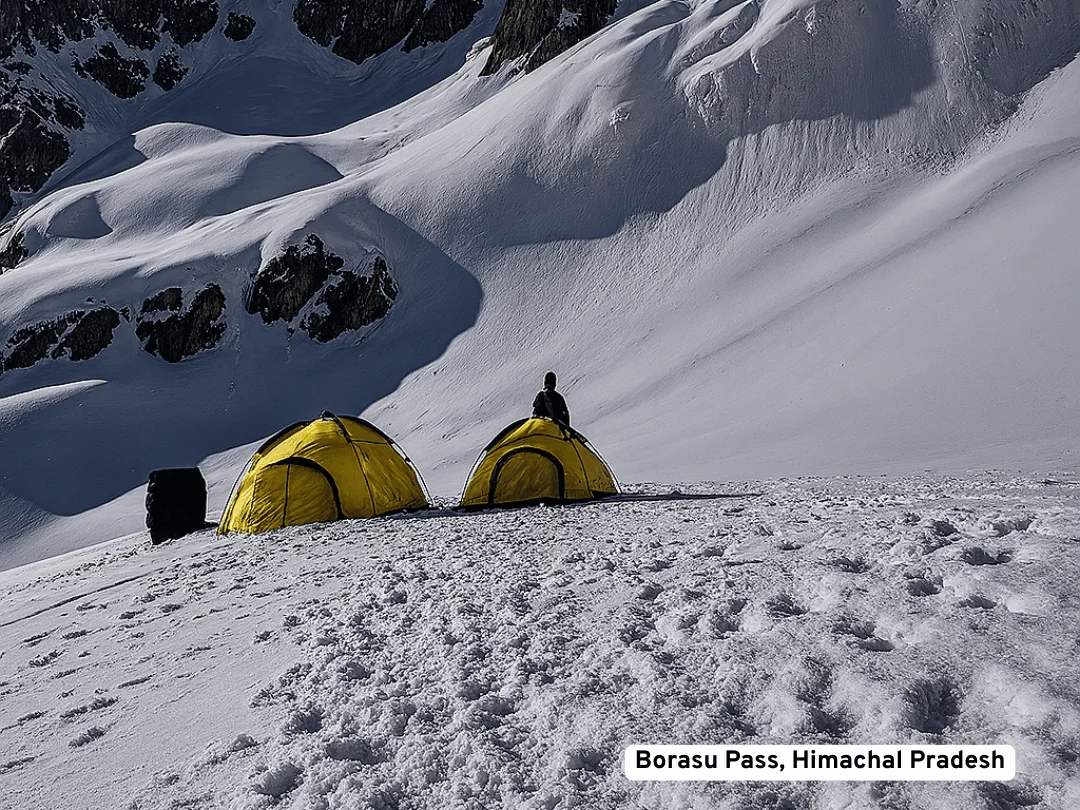
Borasu Pass is a high-altitude mountain pass located at around 5,450 meters, connecting Har Ki Dun Valley in Uttarakhand to Chitkul in Himachal Pradesh. Known for its rugged terrain, snowfields, and glacial crossings, the pass offers a thrilling trek for experienced mountaineers. It was once an old trade route between the Kinnauri and Garhwali communities. The journey to Borasu Pass takes you through dense forests, alpine meadows, remote villages, and breathtaking Himalayan vistas—making it one of the most adventurous and least explored trekking routes in India.
Borasu Pass, perched at an elevation of approximately 5,450 meters (17,880 ft), is one of the most remote and challenging high-altitude passes in the Indian Himalayas. It lies on the border of Uttarakhand and Himachal Pradesh, linking the lush Har Ki Dun Valley in Uttarkashi with the rugged terrain of Chitkul in Kinnaur.
The trail traverses ancient trade routes once used by local communities of Tons Valley and Kinnaur, offering a rare glimpse into the traditional trans-Himalayan lifestyle. Today, the route stands as a demanding yet highly rewarding trekking expedition, ideal for seasoned trekkers looking to go off the beaten path.
The Borasu Pass Trek typically begins from Taluka or Sankri, following the route through Seema, Osla, Har Ki Dun, and Marinda Tal, before beginning the strenuous climb toward the pass. The landscape gradually changes from pine and deodar forests to alpine meadows, glacial basins, and snow-covered ridgelines.
Crossing the pass requires navigating crevasses, snow bridges, and steep icy slopes—making it suitable only for trekkers with prior high-altitude and glacier trekking experience.
After the summit, the trail descends sharply into the Baspa Valley, ending at the picturesque village of Chitkul, the last inhabited village on the Indo-Tibetan border.
Altitude: ~5,450 meters
Difficulty Level: Difficult
Duration: 8–10 days
Total Distance: ~65–75 km
Best Time to Visit: June and mid-September to early October
Key Stops: Sankri, Osla, Har Ki Dun, Marinda Tal, Lamjunga, Chitkul
Rare Route: Very few trekkers attempt this trail each year, preserving its raw, untouched charm.
Cultural Experience: Start the journey in Garhwali villages and end in Kinnauri settlements—experiencing two distinct cultures.
Diverse Terrain: Dense forests, meadows, glacial moraines, high passes, and desert-like Spitian landscapes.
No Crowds: Unlike Roopkund or Kedarkantha, Borasu remains peaceful and pristine.
Not a beginner trek – proper acclimatization and technical gear (crampons, ropes) are essential.
Camping only – No accommodations available beyond Har Ki Dun.
Permits – Inner Line Permits are required for crossing into Kinnaur.
Borasu Pass has historically been a trans-Himalayan trade route connecting the Tons Valley in Uttarakhand to the Baspa Valley in Himachal Pradesh. Local communities used the trail to exchange goods like wool, salt, and grains, long before motorable roads reached these regions. While it was not part of any royal trade highway, the pass held local economic and cultural significance, especially for the Garhwali and Kinnauri tribes. Today, the pass is known more as an adventurous trail for seasoned trekkers and has gained popularity for its raw, unspoiled Himalayan landscape.