
Treks by
The ideal time to visit Bharat Mandir is during the cooler months from October to March, when the weather is pleasant for sightseeing and outdoor activities. Additionally, visiting during festivals like Basant Panchami or Diwali can provide a deeper cultural experience as one witnesses the temple’s vibrant celebrations.
By Air: The nearest airport is Jolly Grant Airport in Dehradun, approximately 19 km away. From there, taxis and buses are available to reach Rishikesh. By Train: The Rishikesh Railway Station is about 2 km from Bharat Mandir. It is well-connected to major cities in India. By Road: Rishikesh is accessible via national highways. Regular buses and taxis operate from nearby cities like Haridwar and Dehradun. Local Transport: Within Rishikesh, auto-rickshaws and cycle rickshaws are common modes of transport to reach the temple.
{}
372 meters
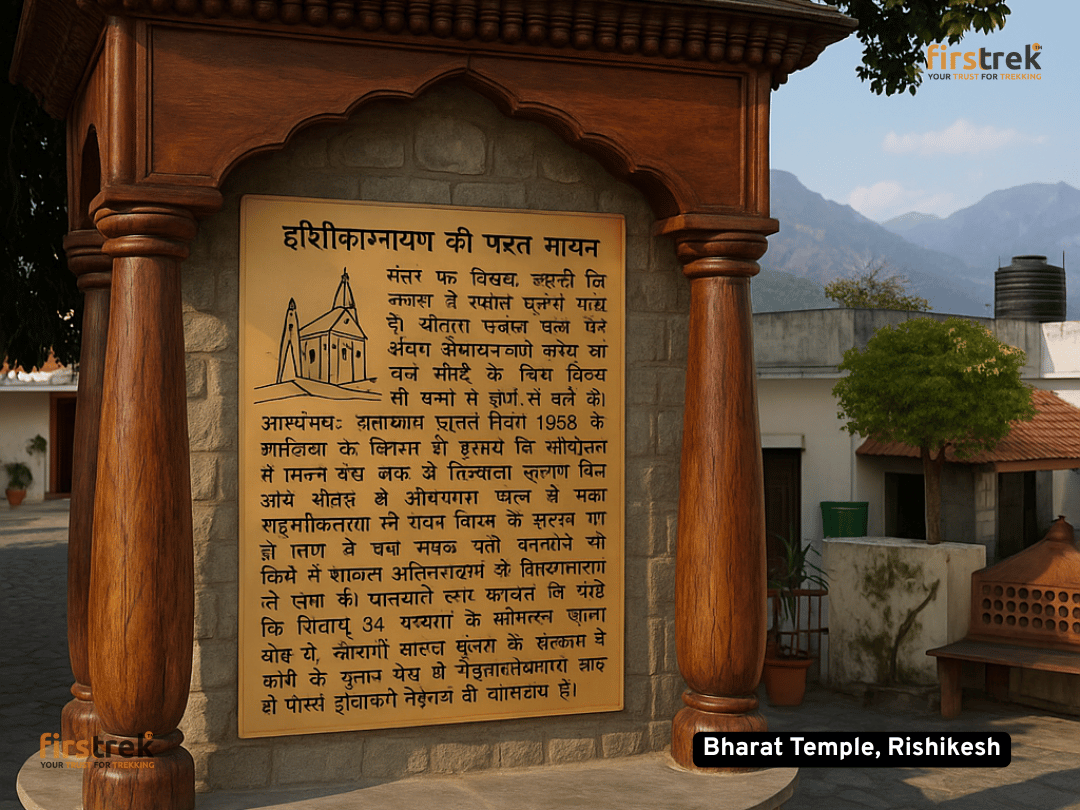
Bharat Mandir, located in the heart of Rishikesh near Triveni Ghat, is one of the city's oldest and most revered temples. Dedicated to Lord Hrishikesh Narayan, a form of Lord Vishnu, the temple is believed to have been established by Adi Shankaracharya in 789 AD .
The temple's origins are steeped in legend. It is said that sage Raibhya Rishi performed intense penance at this site, prompting Lord Vishnu to appear and bless him. As a result, the deity chose to reside here as Hrishikesh Narayan, giving the town
Over the centuries, Bharat Mandir has witnessed various historical events. It suffered destruction during Timur's invasion in 1398 AD but was subsequently rebuilt. In 1832 AD, Maharaja Yashwant Singh of Nabha state renovated the temple's exterior
Bharat Mandir is the oldest temple in Rishikesh, believed to date back to the 8th century AD. It was established by the great spiritual reformer Adi Shankaracharya on the auspicious day of Basant Panchami in 789 AD. The temple is dedicated to Lord Hrishikesh Narayan, a form of Lord Vishnu. According to legend, Raibhya Rishi meditated here, and Lord Vishnu appeared to him, blessing the site. The temple has endured significant historical events. It was destroyed during Timur's invasion in 1398 AD and later rebuilt and restored in the 19th century by royal patronage.