
Treks by
March to June: Pleasant summer temperatures with clear skies; ideal for sightseeing and trekking. September to November: Post-monsoon freshness and fewer tourists. Great for spiritual visits and nature lovers. Avoid July–August: Heavy rains can cause slippery trails and temporary closures near the waterfall area. Winter (Dec–Feb): Cold but calm. Fewer crowds and a serene ambiance.
By Air: The nearest airport is Gaggal (Dharamshala) Airport, located about 20 km away. Taxis are easily available from the airport to McLeod Ganj and Bhagsu village. By Train: The closest railhead is Pathankot Railway Station, approx. 90 km away. From there, you can take a taxi or bus to McLeod Ganj. By Road: Bhagsunag Temple is well connected by road. You can reach McLeod Ganj via public or private buses from Delhi, Chandigarh, or Amritsar. The temple is a short 2 km walk or auto ride from McLeod Ganj's main square.
{}
1,770 meters
Bhagsunag Temple, located in McLeod Ganj, Dharamshala, is an ancient Hindu shrine dedicated to Lord Shiva. Believed to have been built by the Gorkha regiment in the early 19th century, the temple holds deep spiritual and historical significance. According to legend, King Bhagsu built the temple after being forgiven by Lord Shiva for stealing water from the sacred NagDal Lake. Surrounded by hills and freshwater springs, the temple is a peaceful stop for pilgrims and tourists alike. Nearby attractions include the famous Bhagsu Waterfall and serene trekking paths, making the temple a perfect blend of spirituality and natural beauty.
Bhagsunag Temple, also known as Bhagsu Nag Temple, is one of the oldest and most revered temples in the Dharamshala region of Himachal Pradesh. Located in the quaint village of Bhagsu, just 2 km from McLeod Ganj, this ancient Hindu temple is dedicated to Lord Shiva and the serpent deity Nag Devta. The temple holds great spiritual importance among local Gorkhas, Hindus, and visiting pilgrims.
The temple is believed to be over 5,000 years old, rooted in the legend of King Bhagsu and Nag Devta. According to mythology, King Bhagsu stole water from the sacred NagDal Lake to save his drought-stricken kingdom. Upon being caught by Nag Devta, a fierce battle ensued. However, the king repented, and the serpent god eventually forgave him. The temple was built as a symbol of peace and forgiveness between the two.
Though the original structure was likely much older, the present temple was reconstructed and maintained by the Gorkha Rifles in the early 1800s, giving it military and cultural relevance as well.
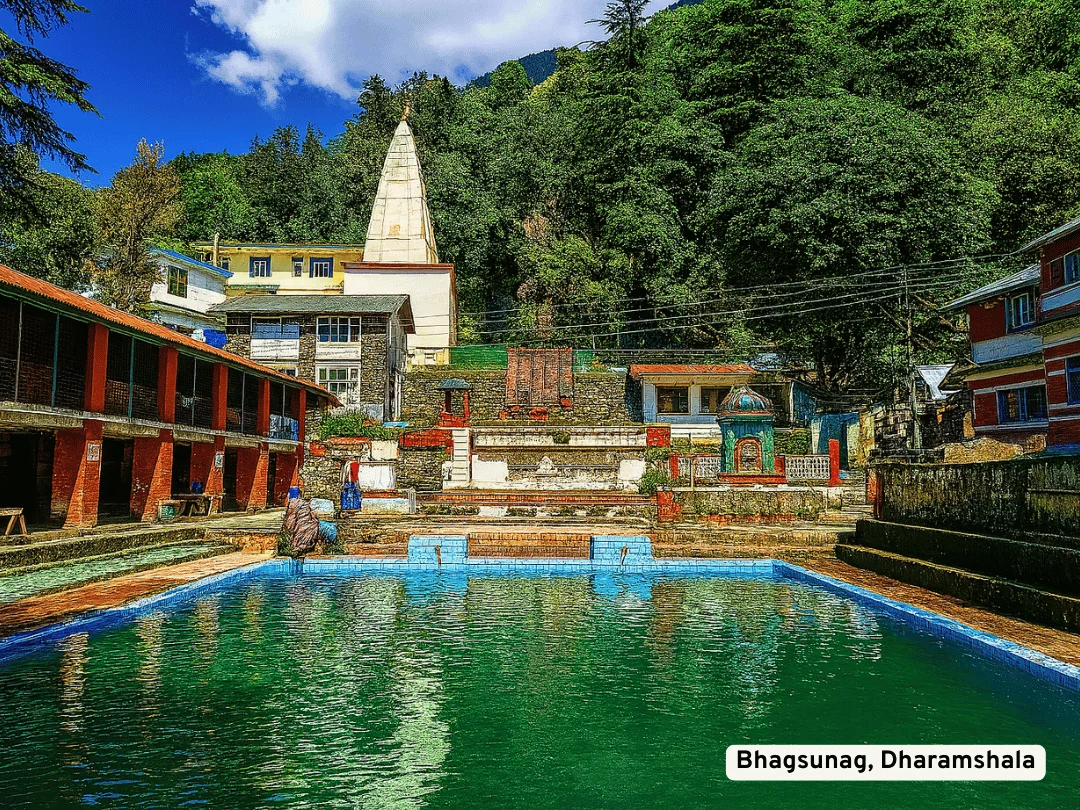
The temple is built in a traditional style with a stone structure, Shiva lingam, and a small natural freshwater pool where devotees bathe before offering prayers. The tranquil courtyard, lined with deodar trees and traditional bells, adds to its serene charm.
Just a short walk away lies the stunning Bhagsu Waterfall, one of the most popular attractions in McLeod Ganj. The cascading waterfall and nearby cafés make it a popular hangout spot for travelers, creating a harmonious blend of spiritual devotion and natural exploration.
The temple is especially significant for:
Local Gorkha and Himachali communities, who regularly visit for worship
Pilgrims and Shaivites, seeking blessings from Lord Shiva
Travelers and tourists, drawn to its peaceful vibe and mythological roots
Rituals, aarti (prayers), and holy dips in the pool are part of the daily spiritual routine.
To explore a mythology-rich heritage site in the lap of the Himalayas
To combine spiritual experiences with scenic treks to Bhagsu Waterfall and Triund
To feel the peaceful blend of Hindu devotion and Himachali culture
As a starting point for treks toward Upper Bhagsu and Dharamkot
Bhagsunag Temple is an ancient Shiva temple believed to be over 5,000 years old, rooted in Himachali and Hindu mythology. The legend tells of King Bhagsu, who stole sacred water from the NagDal Lake to help his drought-stricken kingdom. After a confrontation with Nag Devta (Serpent God), the king repented, and was ultimately forgiven. The temple was then built to symbolize their reconciliation and mutual respect. The present-day structure was renovated by the Gorkha regiment in the early 19th century, giving it both religious and military significance. Today, it stands as a symbol of faith, myth, and cultural unity in the heart of the Dhauladhar foothills.