
Treks by
March to June – Pleasant weather, ideal for trekking and photography September to November – Post-monsoon greenery with clear Himalayan views
By Road: Reach Mussoorie via Dehradun (35 km). From Mussoorie Library Chowk, drive or take a cab to Cloud’s End (about 7 km). The trek to Bhadraj Temple starts from here, covering 7–8 km on foot. By Train: Nearest railhead is Dehradun Railway Station (approx. 35 km from Mussoorie). Hire a taxi or take a bus to Mussoorie. By Air: The nearest airport is Jolly Grant Airport, Dehradun (approx. 60 km). Cabs to Mussoorie are easily available from the airport.
{}
2,200 meters
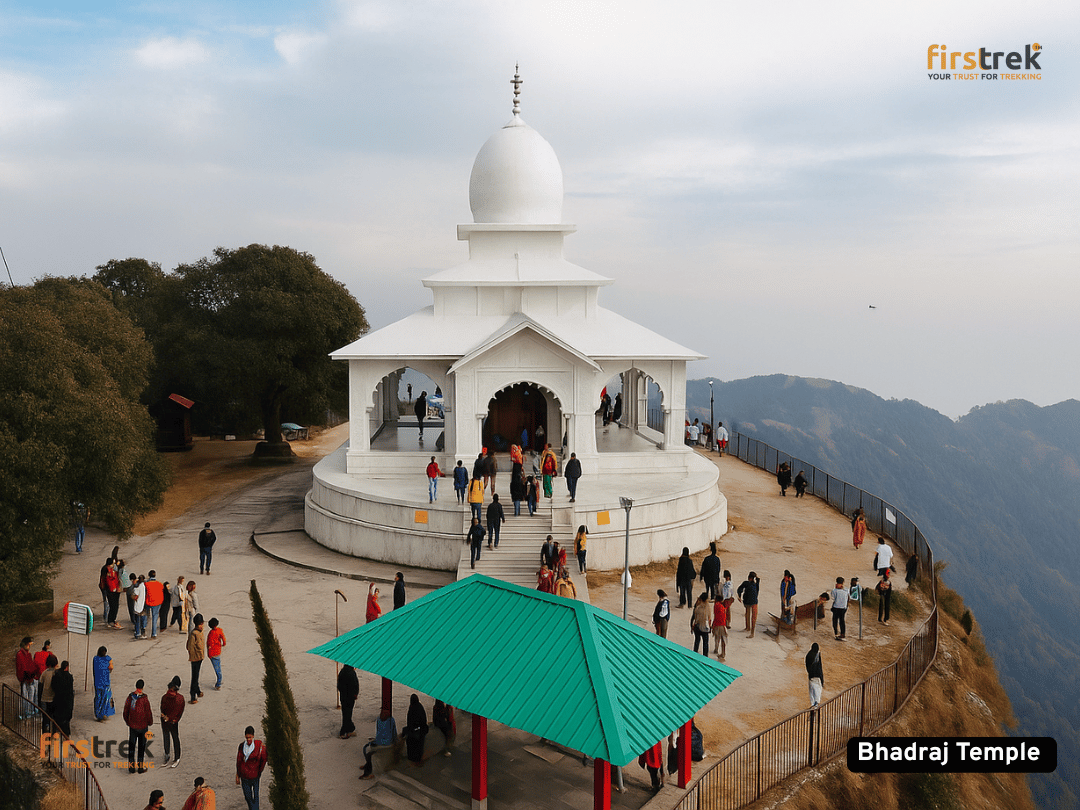
Bhadraj Temple is a revered hilltop shrine located near Mussoorie in Uttarakhand, India. Dedicated to Lord Bal Bhadra (Balarama), the elder brother of Lord Krishna, the temple is not only a spiritual destination but also a popular trekking spot offering panoramic views of the Doon Valley, Shivalik ranges, and the Himalayan peaks.
Bhadraj Temple is a serene and sacred hilltop shrine located about 15 km southwest of Mussoorie, Uttarakhand. Dedicated to Lord Bal Bhadra, the elder brother of Lord Krishna, this temple offers not only a divine atmosphere but also a panoramic trekking experience. Perched at an altitude of approximately 2,200 meters, the temple provides mesmerizing views of the Doon Valley, Chakrata ranges, and the snow-clad Himalayan peaks in the distance.
This peaceful destination is a favorite among nature lovers, trekkers, and spiritual seekers. The route to Bhadraj Temple is a scenic uphill trail starting from Cloud's End, passing through thick oak and deodar forests, meadows, and ridge lines that offer fantastic photo opportunities and birdwatching.
Bhadraj Temple is an ancient hill shrine dedicated to Lord Bal Bhadra (Balarama)—the elder brother of Lord Krishna and revered as an incarnation of Sheshnag. According to local legends, Lord Balarama meditated here during his journey across the Himalayas, and this temple was built to honor his divine presence. The temple is considered one of the oldest in the Mussoorie region, with its origins rooted in mythological times and regional folklore. Although no exact historical record exists, it has long been a center of devotion for the Garhwali people. Shepherds and villagers would often hike up to the temple with offerings of milk and curd, reflecting their deep agricultural and pastoral traditions.