
Treks by
April to June: Clear skies, pleasant weather, ideal for outdoor activities like trekking and camping September to November: Autumn colors, crisp air, and less crowded trails December to February: Heavy snowfall; stunning but limited access July to August: Monsoon season—risky due to landslides and swelling river levels
By Air: Nearest Airport: Shimla Airport (~220 km away) From Shimla, hire a taxi or take a bus to Sangla (via Rampur and Karcham) By Train: Nearest Railhead: Kalka Railway Station (~270 km from Sangla) Continue by road via Shimla and Rampur to reach Sangla By Road: Sangla is well connected by road from Shimla, Rampur, and Reckong Peo Drive or take HRTC/state-run buses to Karcham, from where a narrow mountain road leads into Sangla Valley The Baspa River flows through Sangla, Rakchham, and ends near Chitkul
{}
2,600 meters
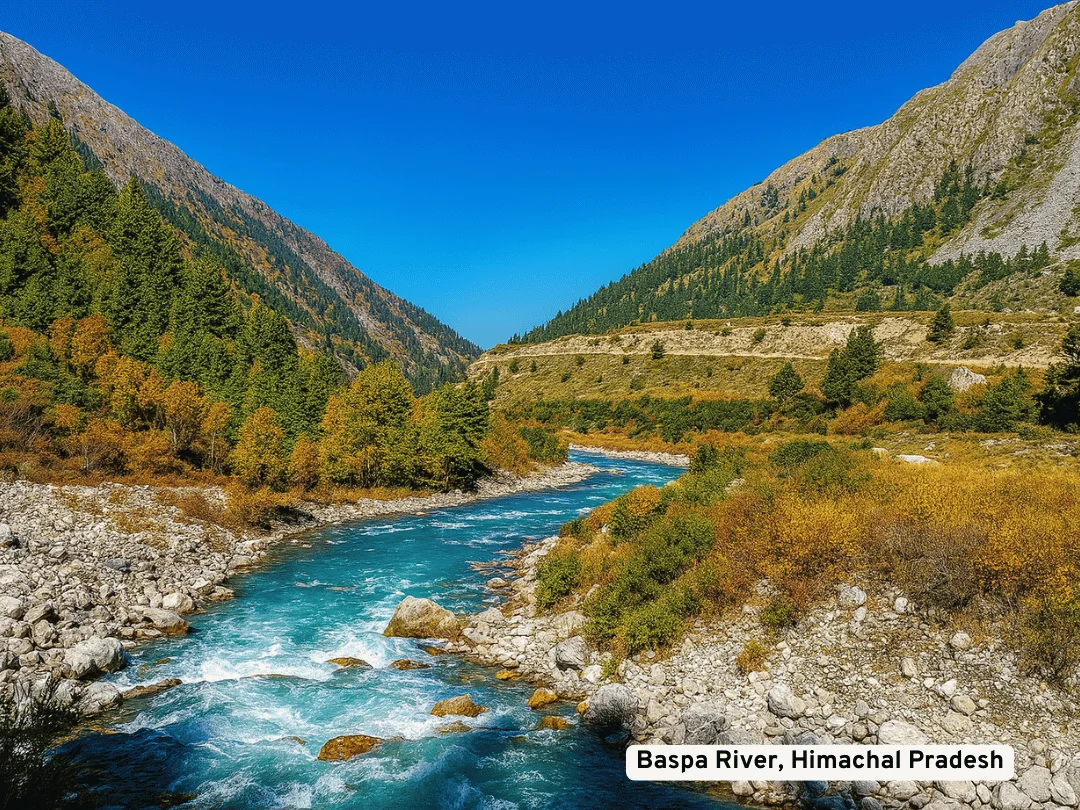
The Baspa River is a picturesque mountain river flowing through the scenic Sangla Valley in Himachal Pradesh. Originating from the Baspa Hills near the Indo-Tibetan border, it merges with the Sutlej River at Karcham. Known for its crystal-clear waters and serene landscapes, the Baspa River is surrounded by dense pine forests, apple orchards, and snow-capped peaks. It’s a popular spot for trout fishing, riverside camping, and photography. The river adds unmatched charm to villages like Chitkul and Sangla, making it a key attraction in the Kinnaur region.
The Baspa River is one of the most beautiful and serene rivers in the Indian Himalayas, flowing through the enchanting Sangla Valley in the Kinnaur district of Himachal Pradesh. Originating from the Baspa Hills, near the Indo-Tibetan border, the river travels through high-altitude alpine terrain before merging with the Sutlej River at Karcham. It is fed by glacial streams and snowmelt, which keeps its waters clean, cold, and crystal clear throughout the year.
The Baspa River is surrounded by dense pine and deodar forests, lush green meadows, and towering snow-covered peaks. As it meanders through charming villages like Sangla, Rakchham, and Chitkul, it creates an idyllic setting that attracts trekkers, nature lovers, and photographers. The river’s banks are dotted with blooming wildflowers in spring and apple orchards in summer, making it one of the most scenic river valleys in Himachal Pradesh.
The Baspa River is not just a visual delight but also a hub for light adventure:
Trout Fishing: The cold waters are rich in trout, making it a favorite among anglers (permits required).
Camping: Several riverside camps are set up near Sangla and Rakchham, offering a tranquil mountain experience.
Trekking: The Baspa Valley serves as a gateway for popular treks like the Chitkul–Nagasti trail and Borasu Pass trek.
Photography & Nature Walks: Ideal for landscape and wildlife photography, especially during early mornings and golden hours.
Flowing through the culturally rich Kinnaur region, the Baspa River nourishes villages that still preserve ancient traditions and wooden architecture. In places like Chitkul, which is the last inhabited village on the Indo-Tibetan border, the river supports local farming and spiritual practices. The river is often considered sacred by locals, symbolizing purity and life in the valley.
April to June: Pleasant weather, clear skies, and blooming flora
September to November: Crisp air, autumn colors, and fewer tourists
Winter (Dec–Feb): Snow blankets the region, but access may be limited
Avoid July–August: Monsoon season brings landslide risks and high water levels
Source: Near Indo-Tibetan border, above Chitkul
Mouth: Confluence with Sutlej River at Karcham
Nearby Places: Sangla, Rakchham, Chitkul
Elevation Range: ~2,600 m to 3,450 m above sea level
The Baspa River is more than just a water source—it’s the soul of the Sangla Valley. With its blend of natural charm, cultural richness, and adventure potential, it stands out as one of Himachal Pradesh’s most underrated yet unforgettable destinations.
The region surrounding the Baspa River, particularly Sangla Valley, holds a rich blend of mythological significance and tribal heritage. Historically, this area was part of the ancient Kinnaur kingdom, once believed to be ruled by descendants of the Kinnauras—semi-mythical beings mentioned in Hindu scriptures. The Baspa Valley has long served as a route for trade and spiritual journeys toward the Indo-Tibetan border. Over time, it remained isolated due to its rugged terrain, which helped preserve its unique traditions, dialects, and wood-carved architecture.