
Treks by
March to June: Pleasant weather, blooming greenery, and calm river views September to November: Clear skies and a peaceful post-monsoon environment Avoid July–August: Due to possible heavy rainfall and slippery road conditions Winter (Dec–Feb): Chilly but scenic with lesser crowds
By Air: Nearest Airport: Bhuntar Airport (Kullu-Manali Airport) – 6 km away From the airport, hire a taxi or auto-rickshaw to Bajaura By Train: No direct train to Kullu. Nearest railhead: Joginder Nagar (approx. 120 km) From there, travel by bus or taxi to Kullu By Road: From Kullu: Just 4 km south of the town, easily accessible via NH3 From Manali: Approx. 45 km; private taxis and HRTC buses are available Well-connected by local buses, private taxis, and self-drive options
{}
1,100 meters
The Basheshwar Mahadev Temple is a serene and ancient shrine dedicated to Lord Shiva, located on the banks of the Beas River in Kullu town. Believed to be centuries old, this temple is known for its calm atmosphere, dense cedar and deodar surroundings, and meditative ambiance. Less crowded than Kullu’s more prominent temples, Basheshwar offers a peaceful retreat for devotees seeking quiet prayer and reflection. The temple's wooden architecture, adorned with carved pillars and a modest sanctum, reflects Himachali craftsmanship and spiritual simplicity.
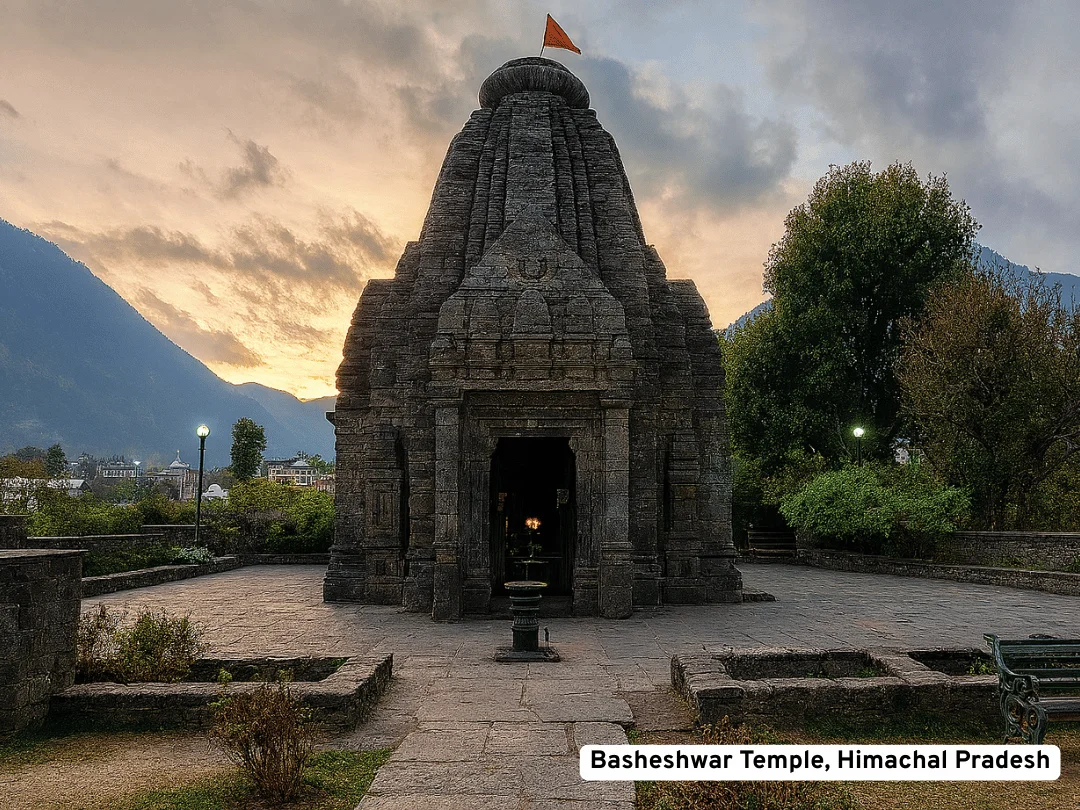
Nestled on the scenic banks of the Beas River in Bajaura village, near Kullu, the Basheshwar Mahadev Temple (also known as Vishweshwar Mahadev) is one of the oldest and most revered temples dedicated to Lord Shiva in Himachal Pradesh. Built in the 9th century AD, this stone temple is a fine specimen of ancient Himachali architecture, combining spirituality with regional craftsmanship.
The temple is constructed in the Shikhara style, with a pyramid-shaped spire rising above the sanctum sanctorum. The intricate carvings on its exterior walls depict scenes from Hindu mythology, showcasing not just Lord Shiva but also Lord Vishnu, Goddess Durga, and Lord Ganesha—reflecting the temple’s inclusive spiritual aura.
Inside the temple is a shivling, worshipped daily by locals and travelers alike. Despite its ancient origins, the temple remains intact and continues to function as an active place of worship.
Surrounded by lush cedar trees and the flowing Beas River, the temple exudes peace and natural charm. It's a favorite stop for pilgrims and those en route to Manali, offering a perfect blend of devotion, heritage, and Himachali serenity. The quiet environment allows visitors to meditate and reflect in a setting steeped in divine energy.
While not as commercialized as other temples, Basheshwar Mahadev holds a special place in the local belief system. Many people visit it during Shivratri, offering milk, water, and flowers to the shivling and participating in traditional Himachali rituals.
This temple is also often part of spiritual circuits or heritage trails in the Kullu-Manali region, especially for those interested in old-world shrines that carry historical weight and spiritual significance.
The Basheshwar Mahadev Temple, also known as Vishweshwar Mahadev, is believed to have been built during the 9th century AD, making it one of the oldest surviving temples in Himachal Pradesh. It was constructed under the reign of the kings of the Kullu Valley, showcasing early temple architecture in the Nagara style. The temple has stood resilient through time, preserving ancient beliefs, stone carvings, and spiritual traditions. It served not just as a place of worship but also as a spiritual anchor for travelers and traders passing through the Himalayan route.