
Treks by
March to June and September to November
By Road: Baijnath is well-connected via road to major towns in Kumaon such as Almora (72 km), Bageshwar (16 km), Kausani (17 km), and Kathgodam (approx. 145 km). Regular buses and taxis are available. By Train: The nearest railway station is Kathgodam, around 145 km away. From there, you can hire a taxi or take a bus. By Air: The nearest airport is Pantnagar Airport, approximately 190 km from Baijnath.
{}
1126 meters
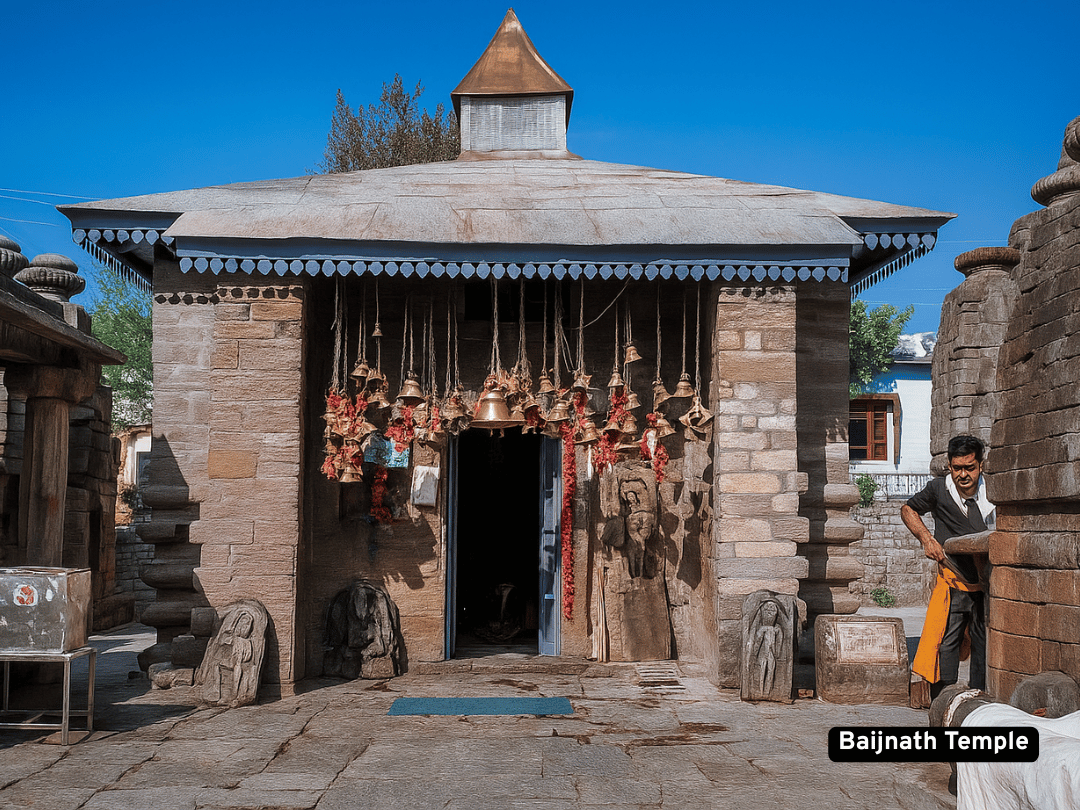
A historic temple complex dedicated to Lord Shiva, Baijnath Temple is nestled along the Gomti River in the Kumaon region of Uttarakhand. Known for its exquisite Nagara-style architecture and spiritual aura, it is a must-visit for pilgrims and heritage enthusiasts alike.
Situated on the serene banks of the Gomti River in the picturesque town of Baijnath in Bageshwar district, the Baijnath Temple is a revered Hindu shrine dedicated primarily to Lord Shiva. This ancient temple complex, believed to have been built around 1150 A.D. by the Katyuri Kings, is a significant example of Nagara-style architecture and an important part of Uttarakhand's spiritual and historical heritage.
The temple is not just a single structure but a complex of temples, each dedicated to various deities including Parvati, Surya, Ganesh, Brahma, and Kartikeya. The main shrine houses a beautiful idol of Parvati made of black stone, standing beside a Shiva Lingam.
Baijnath Temple holds immense historical and spiritual significance in the Kumaon region. Built in 1150 A.D. by the Katyuri Kings, the temple was once the capital of their powerful kingdom, known for its cultural and architectural achievements. The temple complex was originally named Vaidyanath, which eventually evolved into Baijnath, meaning “Lord of Physicians,” a form of Lord Shiva. The architecture of the temple reflects the Nagara style, marked by tall curvilinear towers and intricately carved stone walls. The temples are made of local stone without the use of cement or mortar, showcasing remarkable precision. Inscriptions and relics found at the site link the temple to the flourishing of Hinduism and Shaivism in the region during medieval times.