
Treks by
October to March and July to September
By Road: Bagnath Temple is easily accessible via road from major towns like Almora (90 km), Kathgodam (160 km), and Haldwani (180 km). Regular buses and taxis are available from these hubs. By Train: The nearest railway station is Kathgodam, around 160 km away. From there, taxis and buses are available to Bageshwar. By Air: The nearest airport is Pantnagar Airport, located approximately 190 km away. From Pantnagar, taxis or buses can be hired to reach Bageshwar.
{}
1004 meters
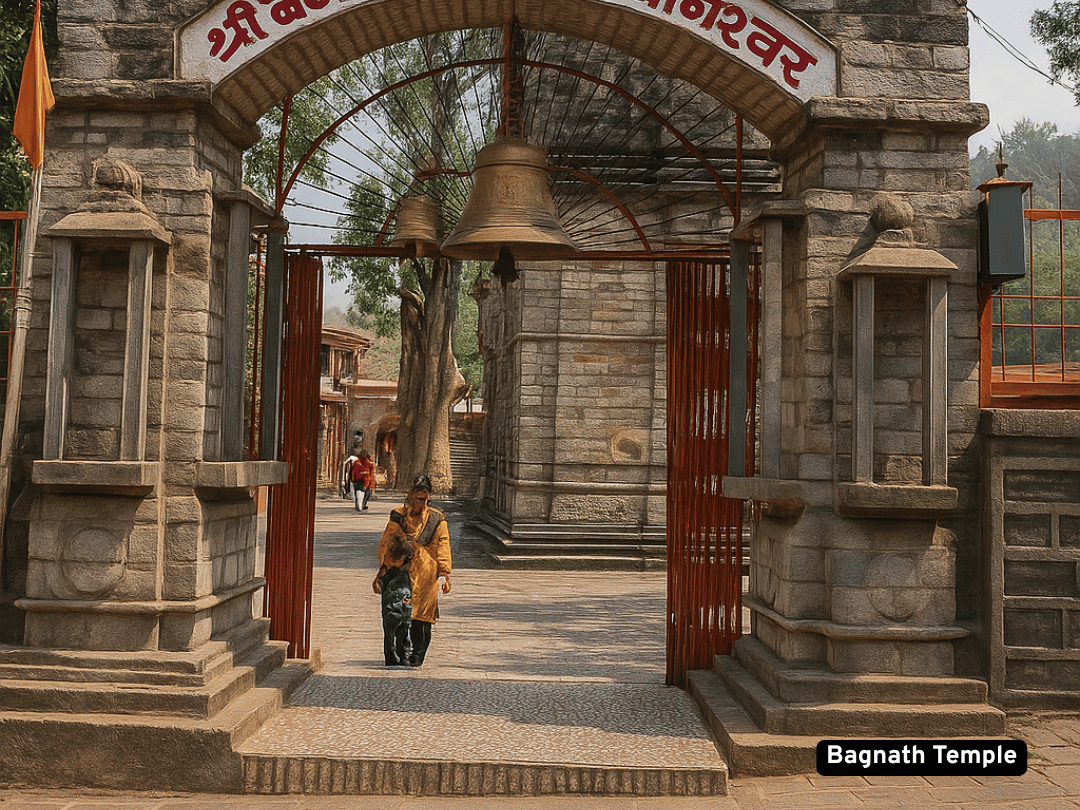
A revered Shiva temple situated at the confluence of the Saryu and Gomti rivers in Bageshwar, Uttarakhand. Bagnath Temple is known for its intricate stone architecture and spiritual ambiance, attracting thousands of devotees during the annual Shivratri festival.
Bagnath Temple is one of the most sacred and historically significant temples in Uttarakhand, located in the heart of Bageshwar town, at the confluence of the Saryu and Gomti rivers. Dedicated to Lord Shiva, the temple holds deep spiritual value and is a prominent pilgrimage site, especially during Shivratri when thousands of devotees visit to offer prayers.
Constructed in medieval Nagara style, the temple is believed to have been originally built in the 7th century and later renovated by King Laxmi Chand in 1450 AD. The stone-carved walls, intricate sculptures of various deities, and towering spire reflect the rich architectural heritage of Kumaon.
Bagnath Temple holds deep mythological and historical significance. According to Hindu legends, it is believed that Lord Shiva appeared in the form of a tiger (Bagh) at this location, which gave the temple its name—Bagnath, meaning "Tiger Lord." The current stone structure was commissioned by King Laxmi Chand of the Chand dynasty in 1450 AD, though references to the temple exist as far back as the 7th century in ancient scriptures. The temple served as a spiritual hub and political center during the reign of Kumaon's Chand rulers.